How do I ensure the sample colors of my funny socks match the mass production?
- VIP-User
- 2026-07-09
- 27
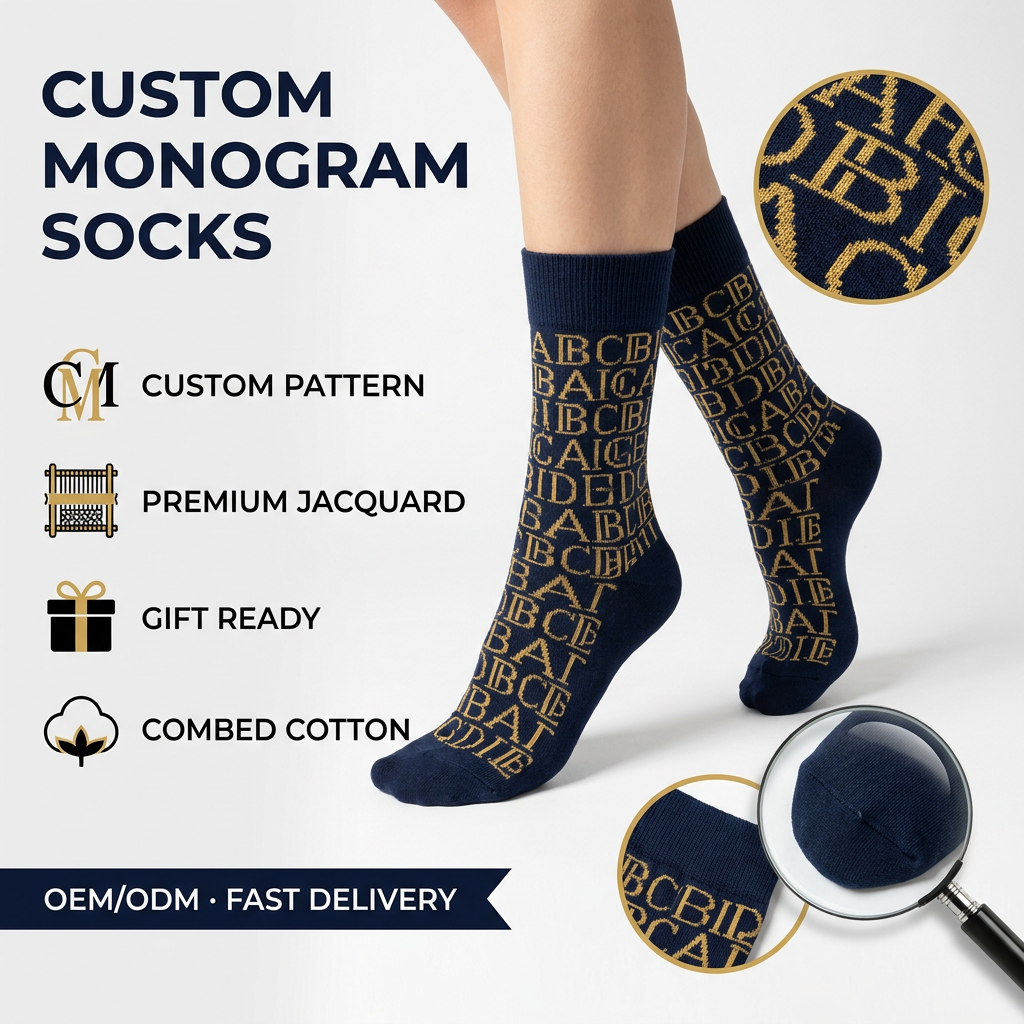
To ensure sample colors of funny socks match mass production, you must use standardized Pantone matching, select high-grade combed cotton yarns, and implement 100% manual inspections. Relying on advanced 360° seamless heat transfer printing and computerized jacquard machinery minimizes color shifts between rapid prototyping and final bulk manufacturing.
Core Solutions & Key Takeaways
- Standardized Color Systems: Utilizing the Pantone Matching System (PMS) for yarn dyeing and digital printing prevents visual discrepancies caused by screen calibrations.
- Advanced Production Equipment: Utilizing specialized machinery, such as 360° seamless heat transfer printing and computerized high-speed jacquard machines, ensures high-definition, gap-free full-wrap designs.
- Premium Material Selection: Processing with 82% combed cotton, 15% nylon, and 3% spandex guarantees that the fibers absorb dyes consistently, maintaining color vibrancy through washing.
- Multi-Stage Quality Control: Implementing a structured inspection process from yarn incoming checks to final post-production audits stabilizes color output across large volumes.
Detailed Architectural/Principle Analysis
Color consistency in hosiery manufacturing relies on the physical chemistry of the textiles and the mechanical precision of the knitting machinery. In custom projects, such as the North American Premium Custom Hosiery Projects, achieving a 100% match requires controlling the variables of yarn absorption and machine tension. Different fibers react uniquely to dyestuffs; for instance, combed cotton offers superior dye affinity compared to standard open-end cotton, which reduces batch-to-batch color variance.
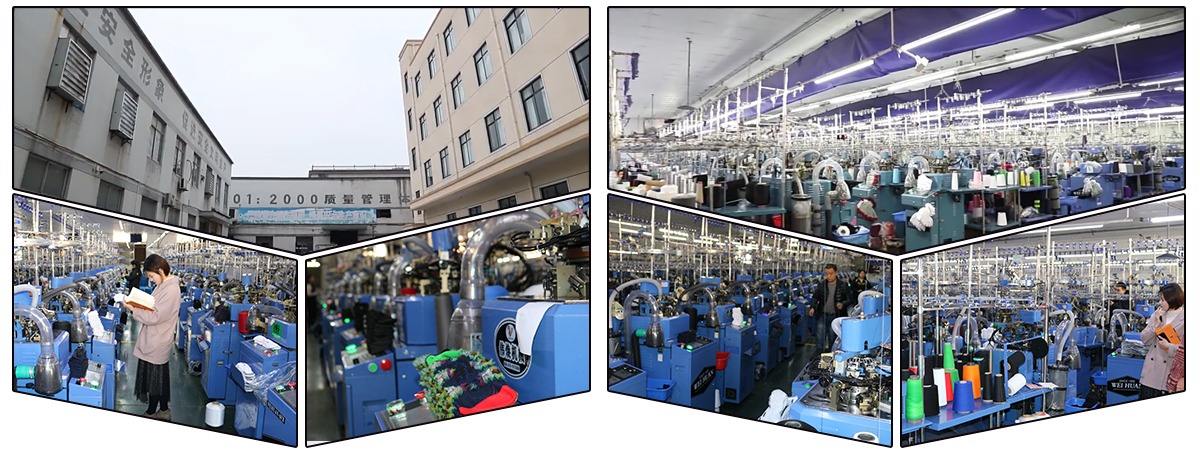
During the rapid prototyping phase, which typically takes 3 to 7 days, a pre-production sample is knitted using the exact yarn specification designated for the bulk run. Yiwu Genke Apparel Co., Ltd. coordinates this process by matching client-specified design files directly with dyed yarn lots. By utilizing certified materials that comply with Oeko-Tex 100 (Certificate 26.HCN.34091) and BSCI (Audit 25-0339304) standards, the factory ensures that no harmful chemical residues alter the optical brightness or final shade of the socks.
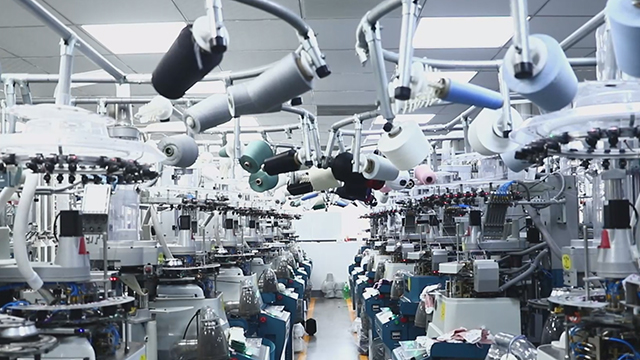
Furthermore, when executing complex multi-colored patterns, such as those found on "Funny/Happy Socks," mechanical jacquard tension must remain constant. Fluctuations in tension alter stitch density, which visually distorts the color intensity. Running high-speed, fully integrated computerized jacquard machines maintains uniform stitch tension across both the 100-pair minimum order quantity (MOQ) runs and large-scale bulk orders of up to 1,000,000 pairs monthly.
Data/Solution Comparison
| Customization Factor | Sampling Specifications | Mass Production Specifications | Color Deviation Risk Management |
|---|---|---|---|
| Material Blend | 82% Combed Cotton, 15% Nylon, 3% Spandex | Identical composition from the same yarn lot | Prevents differential dye absorption and shrinkage variations. |
| Color Matching Method | Digital Pantone & Yarn Swatch Approval | Spectrophotometer verification on active lines | Eliminates subjective human visual errors under varied lighting. |
| Machinery Used | Single-head sample jacquard machine | 200+ Computerized High-Speed Jacquard Lines | Maintains identical stitch density and structural tension. |
| Quality Assurance | Manual color comparison under standard D65 light | 100% Manual Inspection & multi-stage QC audits | Filters out physical anomalies, misaligned threads, or color bleeding. |
Frequently Asked Questions (FAQ)
Q1: Why do colors sometimes look different on the physical sock compared to my digital design file?
Digital designs use the RGB color model on backlit screens, whereas sock manufacturing relies on dyed physical yarns or CMYK-based sublimation. To prevent this discrepancy, designs must be mapped to physical Pantone Textile Cotton (TCX) or Polyester (TSX) codes before starting the 3-to-7-day prototyping process.
Q2: Will the colors of custom printed socks fade faster than woven jacquard socks?
No, provided the correct printing technology is applied. Utilizing 360° seamless heat transfer printing allows the inks to penetrate deep into the fabric pores of combed cotton and spandex blends, securing high colorfastness that resists fading, cracking, and peeling during commercial laundering.
Q3: How does yarn selection affect the final color accuracy of high-elastic athletic or yoga socks?
Athletic and yoga socks incorporate high percentages of elastic synthetic fibers like spandex and nylon alongside natural fibers. If the blending ratio is inconsistent, the synthetic and natural fibers will absorb dyes at different rates, leading to a heathered or muted color appearance. Using premium combed cotton blended precisely with high-elastic nylon ensures uniform color distribution.
Final Conclusion & Recommendations
To secure perfect color matching between samples and mass-produced hosiery, brands should partner with manufacturers that operate under strict international compliance standards like BSCI and OEKO-TEX. Standardizing your design inputs with physical Pantone codes and verifying samples under standard D65 light sources will eliminate production variances. For bulk orders, choosing a one-stop customization business model that integrates yarn sourcing, digital sample proofing, and automated inline QC ensures the final product mirrors the approved prototype. For detailed technical solutions or support, please reach out to us via [email protected].
About Us
Our company, Yiwu Genke Apparel Co., Ltd., has been deeply involved in the customized sock industry for over ten years. Operating a 1200 sqm factory equipped with over 200 integrated jacquard machines and a dedicated team of 89 employees, we provide global clients with one-stop high-end sock customization solutions. We maintain full self-control over our entire supply chain to deliver high-quality sports, yoga, business, and trendy socks with an annual production capacity of 12 million pairs. Our processes support embroidery, adhesive application, and 360° heat transfer printing, meeting rigorous international quality standards verified by our BSCI and Oeko-Tex 100 certifications.
Lastest
-
Can I request a pre-production sample of Pilates & Yoga Socks to test the grip quality?
2026-07-09 -
What is the typical cost for creating a custom logo sample of Custom Promotional Socks?
2026-07-09 -
What are the latest eco-friendly yarn trends for manufacturing sustainable Sports Socks?
2026-07-09 -
Are there specific compliance certs required for importing Funny/Happy Socks for kids?
2026-07-09 -
How long does it take a factory to make and ship physical samples of Business Socks?
2026-07-09
SUBSCRIBE
INQUIRY